
Change the scale of the view
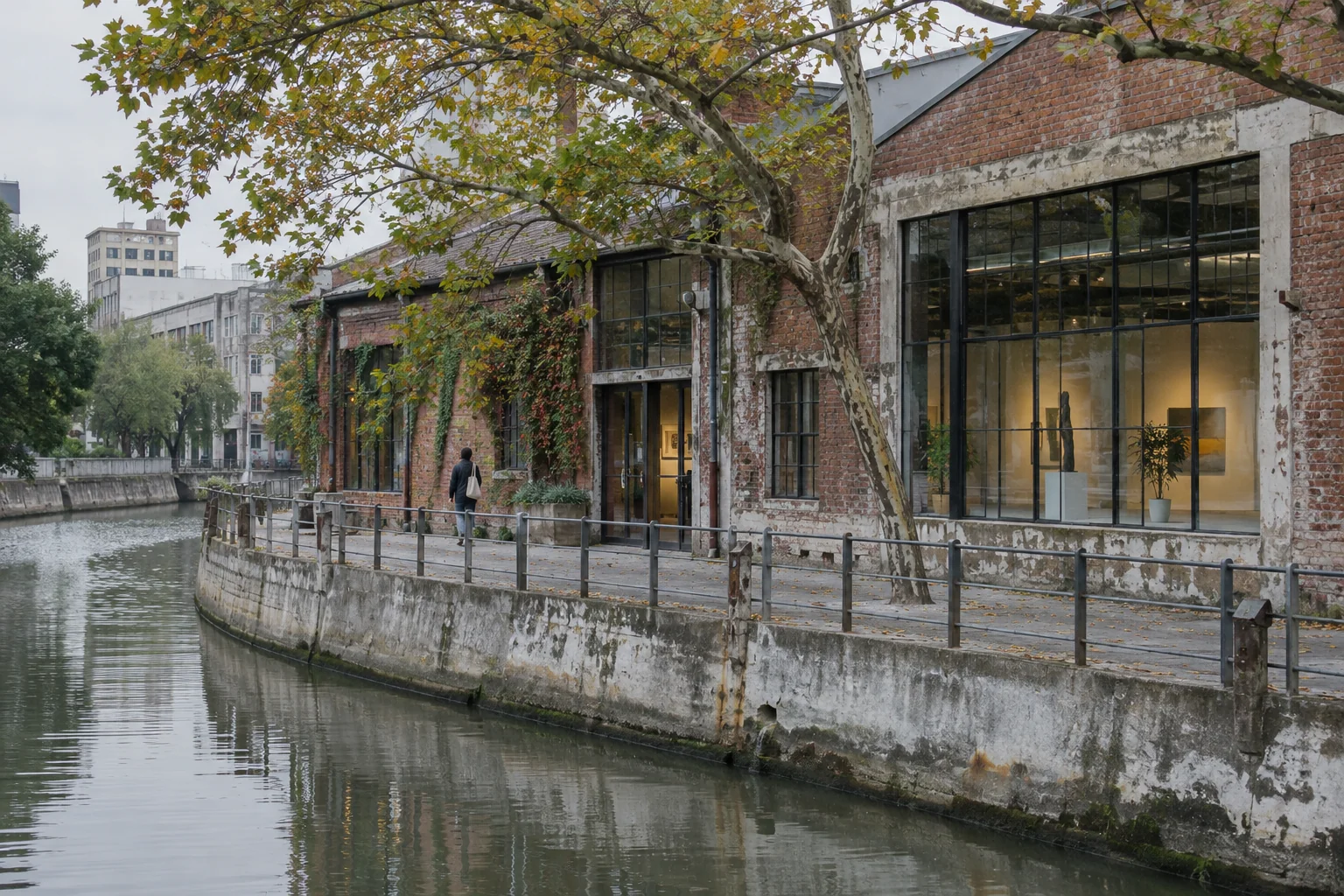
The Huangpu gives Shanghai one of its grand views. Suzhou Creek invites a different kind of attention: the bend ahead, the relationship between a building and the water, the change in sound when you leave a busy road.
Do not try to turn every riverfront place into a single continuous walk. Choose a stretch that suits your time and energy, then decide where you would like to pause. Shanghai is a large city; a riverside afternoon becomes more enjoyable when it has a clear beginning and a comfortable way home.
Look at what a building has become
M50, at 50 Moganshan Road, brings galleries and creative spaces into a former textile-factory setting. The setting makes an interesting companion to the art. Before entering a gallery, look at the scale of a doorway or the proportions of a wall. What kinds of work might the space have held before?
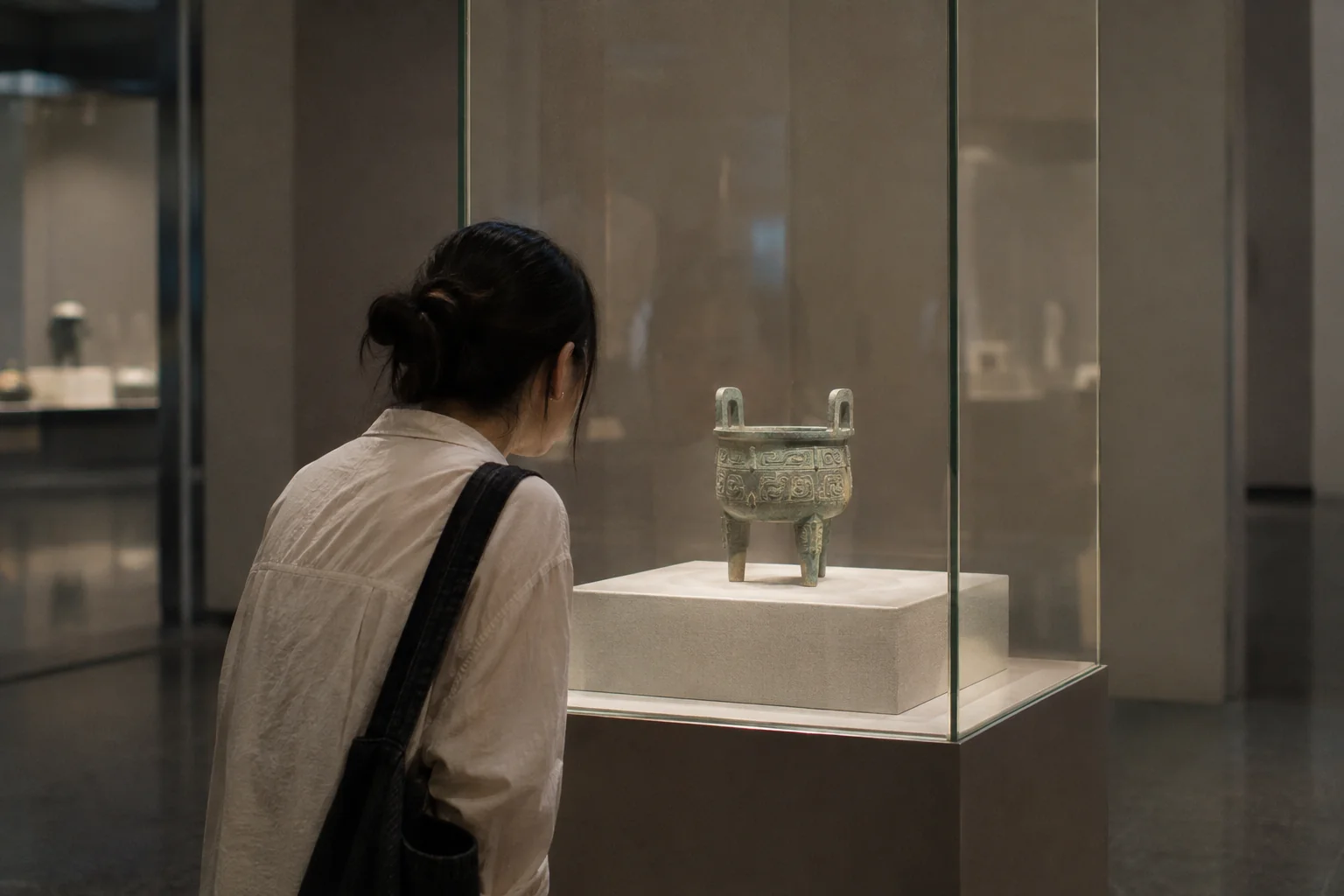
Then let one exhibition take your attention. You do not need specialist vocabulary to respond to an image, an object or a room. Describe what you notice first, and ask your companion what they saw differently. Two people can spend ten minutes in the same space and come away with entirely different starting points.
Leave room for a separate chapter
Gallery opening hours and exhibition programmes vary. Check the places you want to visit rather than assuming every space in a creative district is open to walk-in visitors. Artist conversations and studio access should be arranged explicitly; they are not guaranteed by walking through a district.
If you also want to explore the West Bund, plan it as another part of the day with transfer time, rather than a nearby continuation of the creek. A thoughtfully paced art experience is less about reaching every venue and more about giving an interesting idea enough room to follow you outside.
TAKE THIS WITH YOU
Look for one thing a building has kept from its earlier life. What does it change about the space today?
Before you go
For current visitor arrangements, check the original guidance: