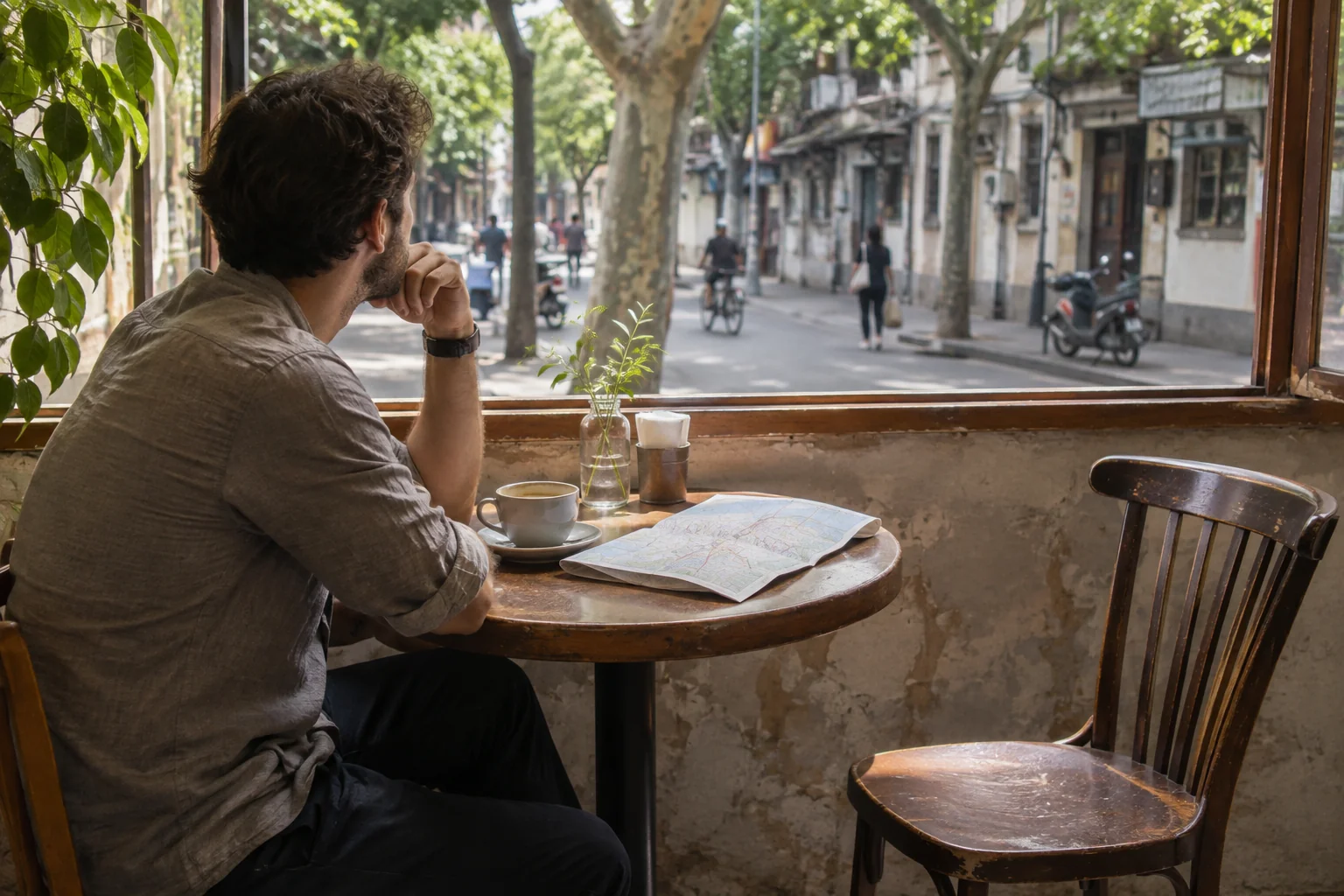

A city is full of things adults walk past
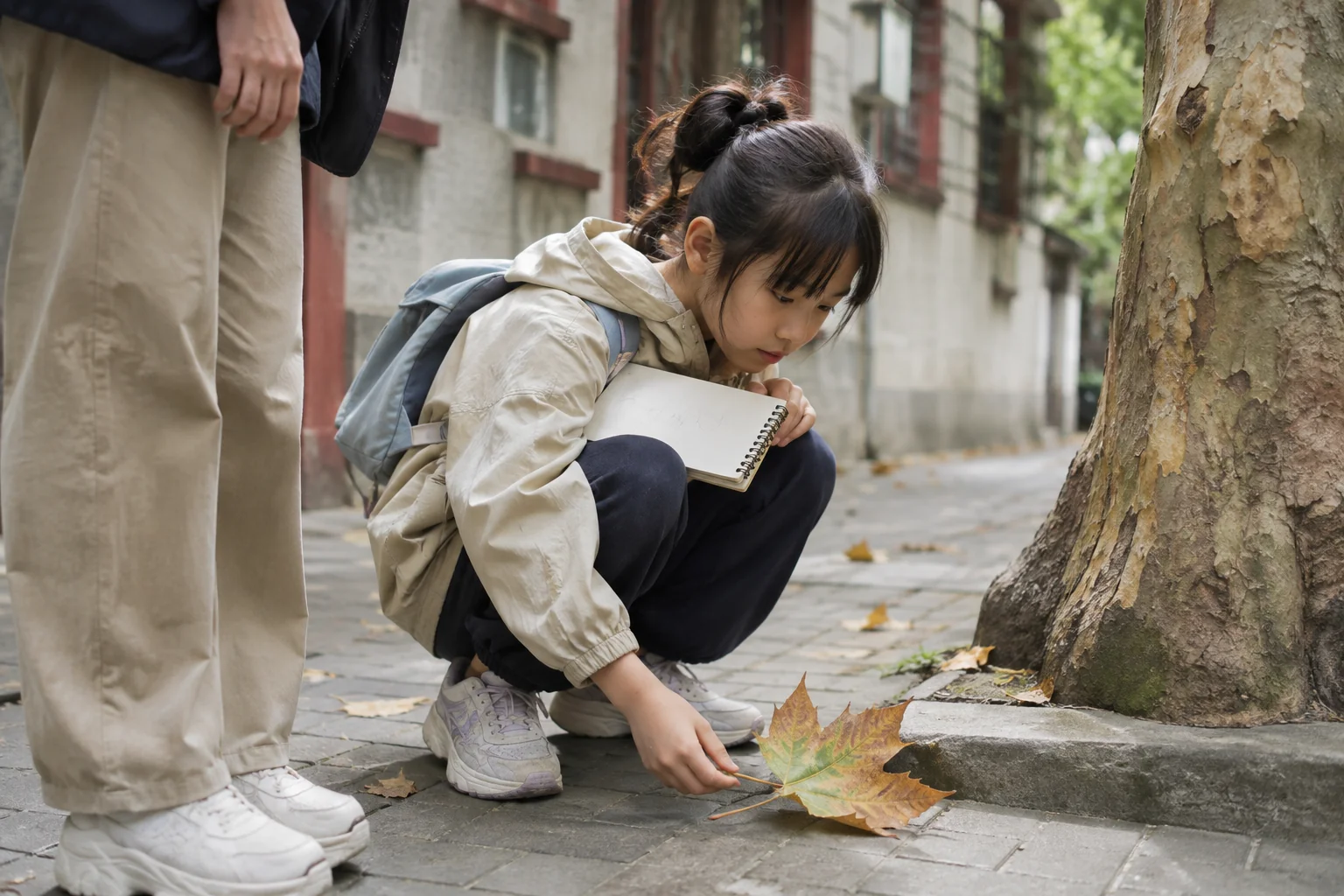
A child may not care which building is the most celebrated on the street. The exciting thing might be a round window, a delivery bicycle or a leaf bigger than their hand. Follow that attention for a moment.
Give the walk a small mission: find three kinds of doorway, notice something that moves without wheels, or choose the colour that best describes the afternoon. There does not have to be a correct answer. The mission turns looking into participation, and gives adults permission to notice differently too.
Plan around energy, not achievement
Choose a compact area with places to pause, and allow enough time for snacks and practical stops. Tell your Host the children's ages, walking comfort, dietary needs and anything that might make the day easier. Discuss step-free access and any pushchair requirements for the actual route; do not assume a neighbourhood is equally convenient along every street.
One engaging stop and an unrushed meal may work better than several major attractions. Let each person contribute something small, including the adults. A family visit feels more generous when nobody spends the whole afternoon trying to keep up with someone else's interests.
Bring home a shared memory
Instead of asking everyone for the best photograph, ask for the most surprising discovery. Children might draw their answer later. Adults might choose a detail they would never have seen alone.
Keep photographs considerate. Ask before making strangers the subject, and let your own family decide how they want to appear in pictures. A personal visit does not require a camera following every moment. When arranging a bespoke experience, begin with how you want to spend time together. The route should serve that conversation, rather than the other way round.
TAKE THIS WITH YOU
Ask every family member to choose one colour, one shape or one sound for the walk.