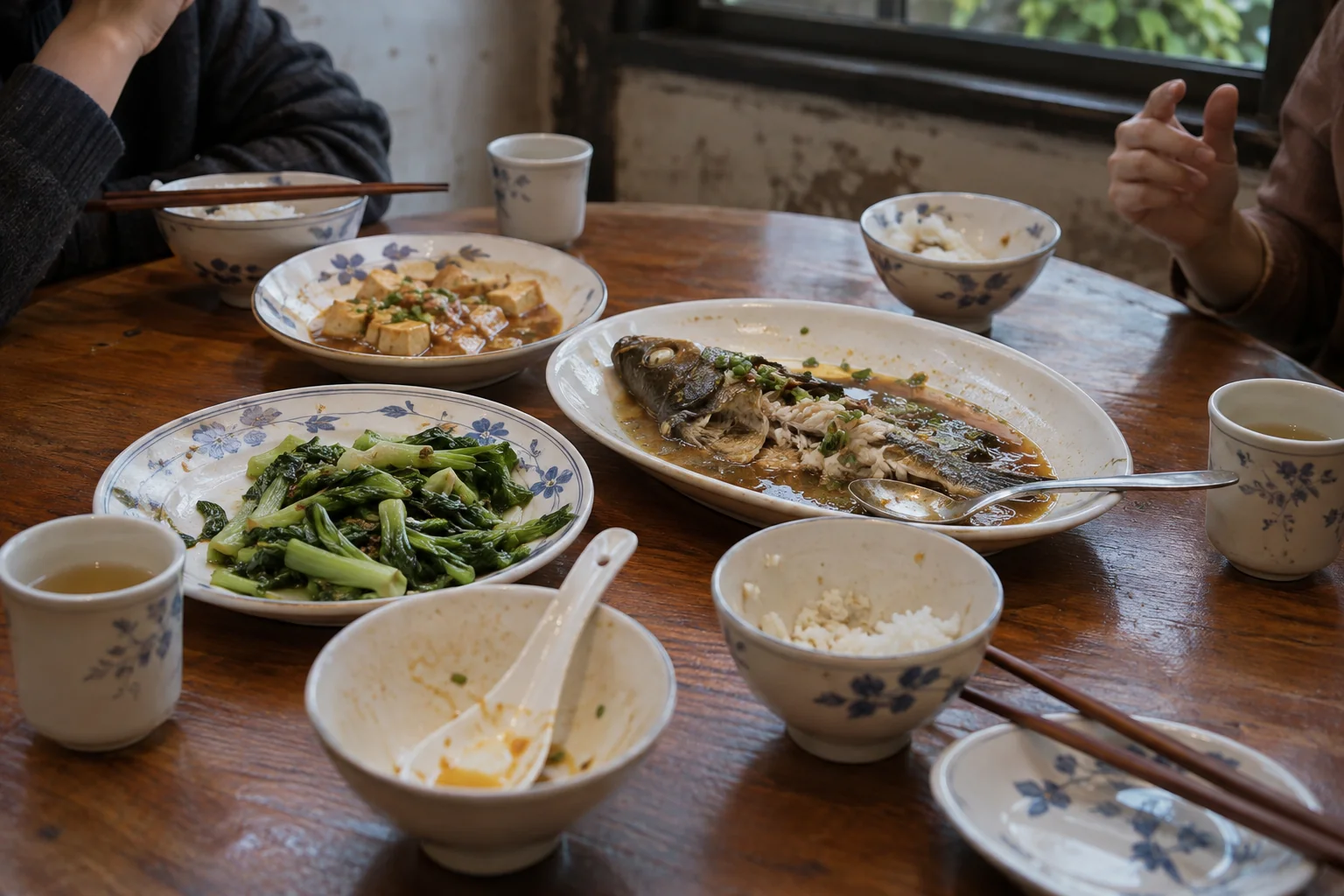

Learn four names, not an entire menu
The first lesson in a city is sometimes a queue. Watch where people pause, how an order is collected and whether there is space to sit. A little observation makes an unfamiliar breakfast counter feel less mysterious.
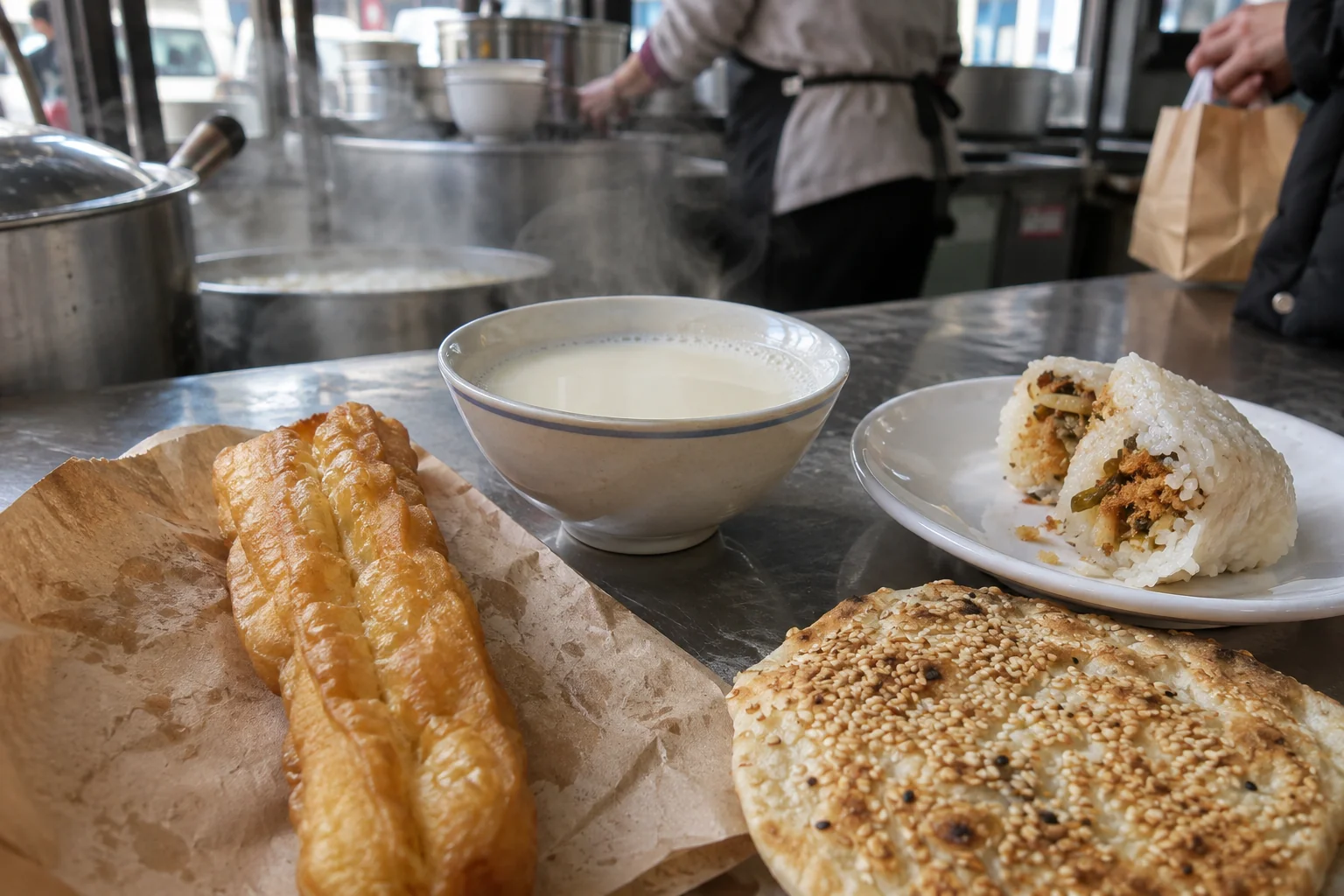
Shanghai's well-known breakfast quartet brings together dabing, a flatbread; youtiao, fried dough; cifantuan, a sticky-rice roll; and doujiang, soy milk. You do not need to order all four. Choose a texture you like, or ask your Host to help you start with one small combination. Learning the name of a food you enjoy is a satisfying kind of progress.
Crisp, soft, warm
Another introduction is shengjian, the pan-fried buns closely associated with the city. Their appeal lives in the contrast between the browned base and the soft upper dough. Hot filling rewards patience: pause before the first bite.
An unfamiliar breakfast does not have to become a test of courage. Order a modest amount, find out what is inside and decide whether you want more. Do not assume that a vegetable-looking filling is vegetarian, or that a sauce is free of an ingredient you avoid. Tell your Host about dietary restrictions before choosing a stop; ask the vendor about ingredients and preparation rather than relying on a translated dish name alone.
Stay long enough for a conversation
Food opens useful questions. What did someone eat before school? Is this a sit-down breakfast or something carried to work? Which taste means home? A simple meal can reveal how people organise a day without making anyone speak for an entire city.
Let the meal set the pace of the morning, then take a short walk. The point is not to visit as many counters as possible. It is to find one thing you would happily order again, and a small piece of language that lets you do it yourself.
TAKE THIS WITH YOU
If you could bring one breakfast ritual from home to Shanghai, what would you choose?
Before you go
For current visitor arrangements, check the original guidance: