
A city at the scale of a doorstep
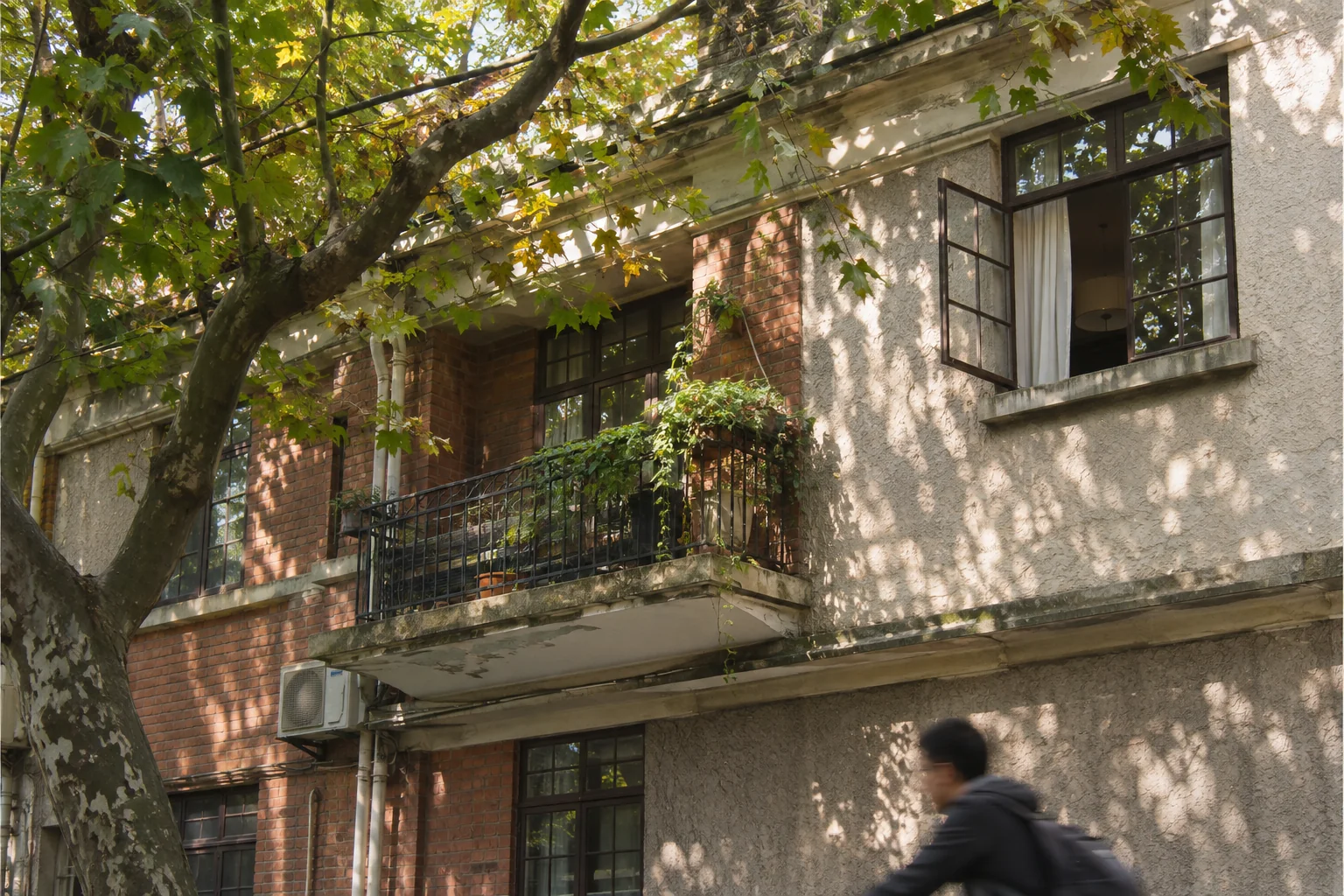
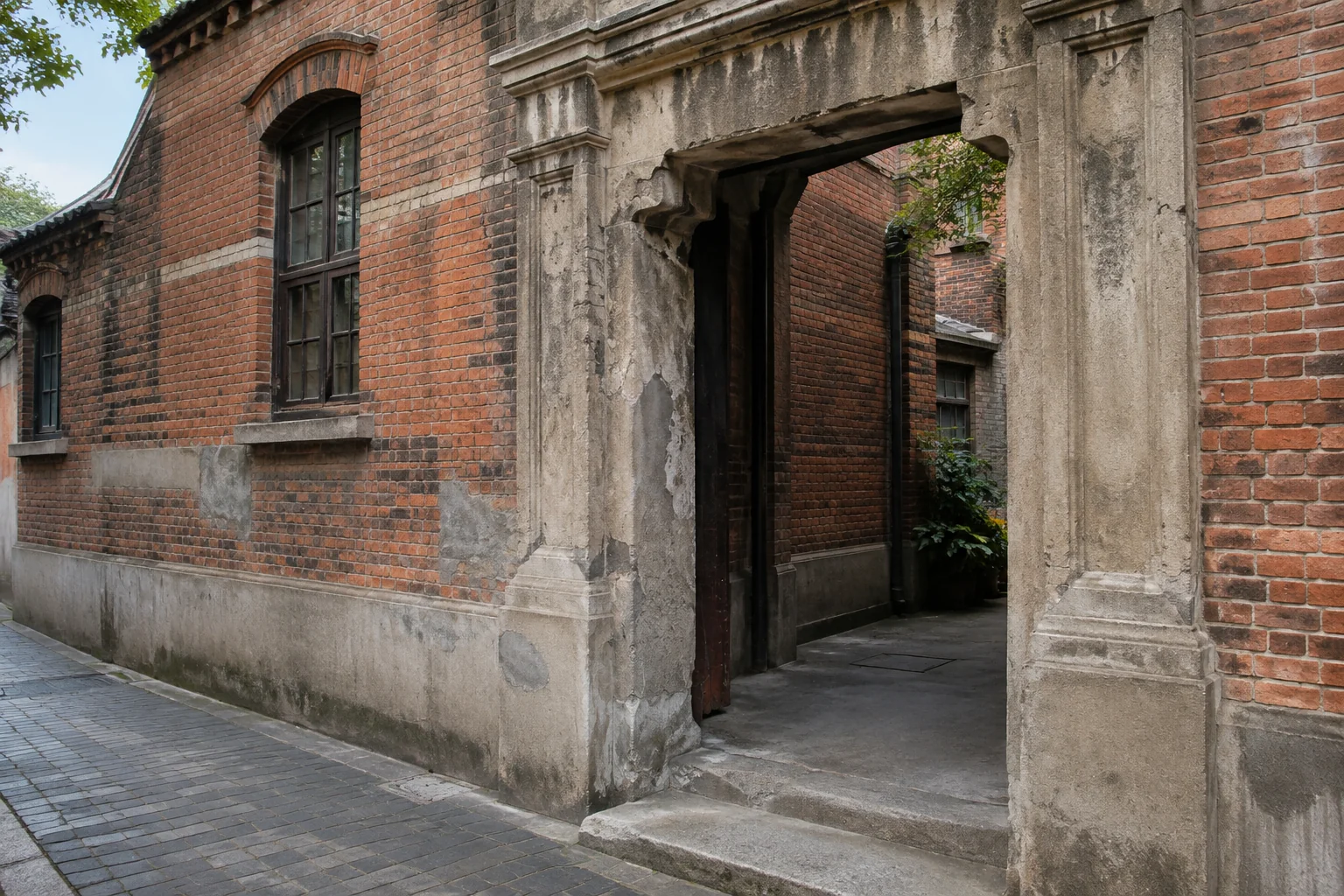
A skyline is easy to recognise from a distance. A lane asks you to come closer and pay attention to smaller relationships: a door beside a passage, a window facing another window, the space where a private room meets a shared world.
Shanghai's shikumen gateways are often treated as symbols. They also offer a way to think about daily life. Stand on a public street and notice how buildings organise closeness. What can be seen, what is sheltered, and where does the street seem to become someone's home?
Keep more than one Shanghai in view
An adapted heritage district and a lived-in residential lane can offer very different experiences. Shops and cafés make some spaces easy to explore; other passages remain places for residents to come and go. Neither should be mistaken for a complete picture of the city.
Instead of asking which is the single authentic Shanghai, ask what each place allows you to understand. A carefully restored façade might begin a discussion about design and reuse. A glimpse from the pavement may prompt a question about how people share space. There is room for history, change and ordinary convenience in the same conversation.
Take a question home
Walk with the same consideration you would want outside your own front door. Do not follow someone through a gate, look into windows or stage photographs in a residential entrance. An open doorway is not necessarily public access. If access is unclear, stay outside.
A thoughtful Host can help connect architectural details with the questions that interest you, without turning residents into exhibits. Ask what has changed in the neighbourhood, or how the idea of a shared courtyard compares with your own city. The most useful souvenir might be a new way of noticing home when you return.
TAKE THIS WITH YOU
What does the space between a home and a street look like where you live?